The Forest
Woods Bagot
Australia

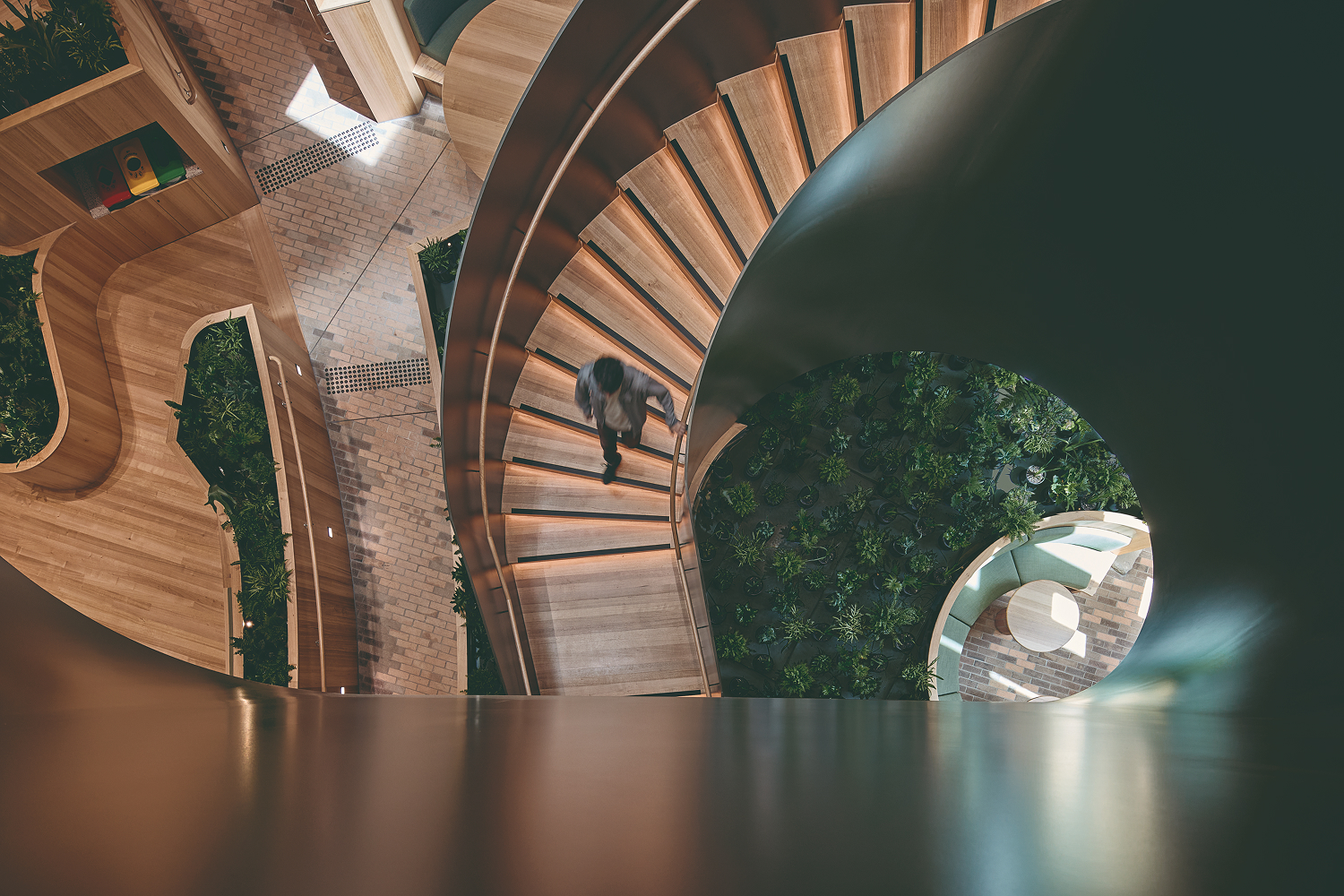
The contemporary learning landscape is changing, with the built environment playing a vital role in the way we approach pedagogical frameworks. Flexibility, wellbeing and integration of the natural environment have a tangible impact on learning outcomes and these principles have informed the curation of space in the University of Tasmania’s new campus.
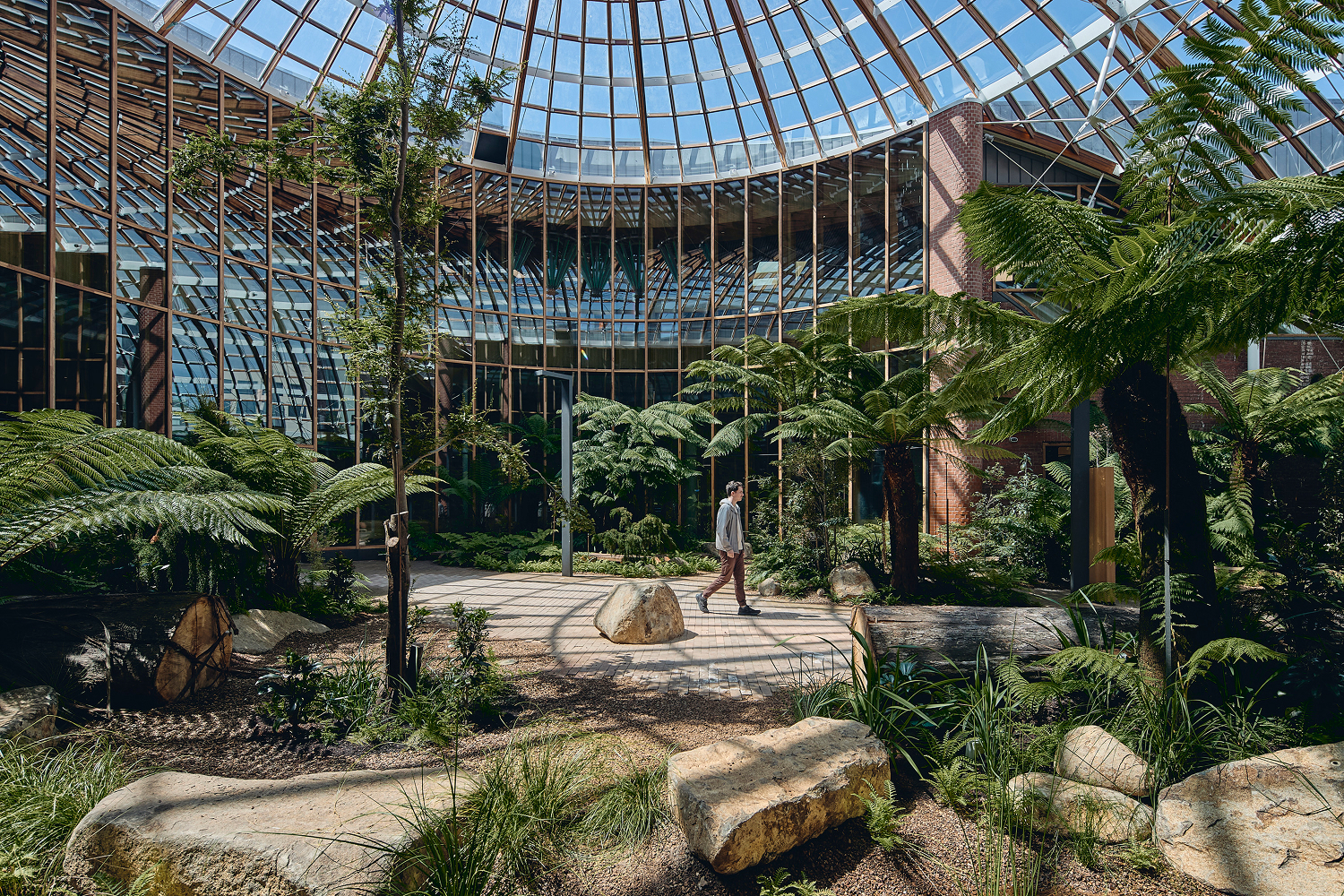
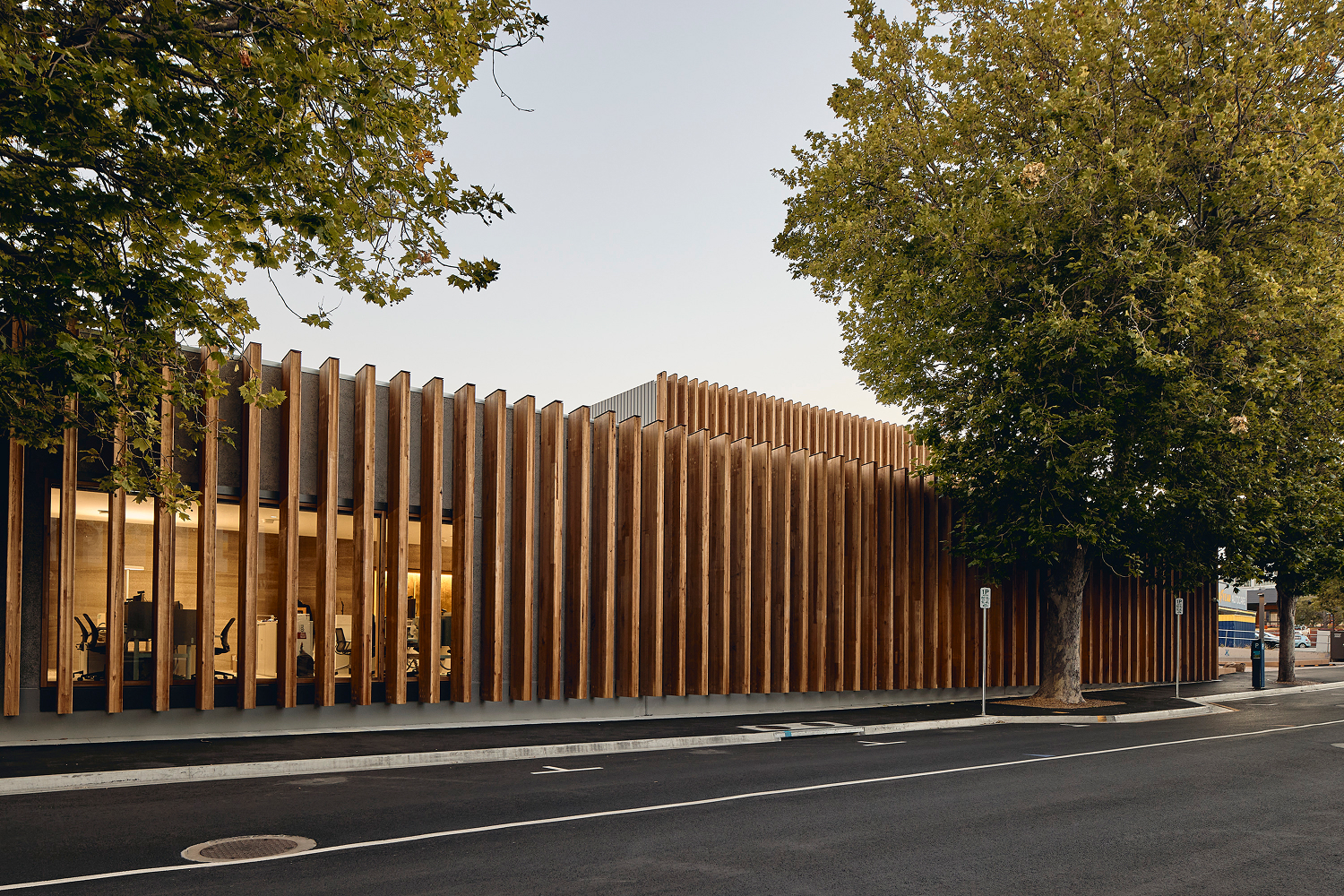
Characterised by vibrant civic spaces and underscored by a connection to place, the design appeals to the senses by introducing fresh air, natural light and native greening. Incorporating an overlay of craft and materiality, the design uses locally sourced materials in their honest forms.
Working sympathetically with found conditions, the design team let the existing drive the conceptual direction of the new. Retaining 40 per cent of the existing structure, the project involves the adaptive reuse of disparate onsite structures, including a heritage-listed, 22-metre glass dome, designed by Morris Nunn and Associates in 1997.
As well as adaptive reuse, the project involves sustainable construction systems and methodologies, including mass timber construction and innovative low-carbon materials and the building iincludes the largest commercial use of hempcrete in Australasia.
Photography: Peter Bennetts
