
Junyi Chen
Chulalongkorn University
Thailand

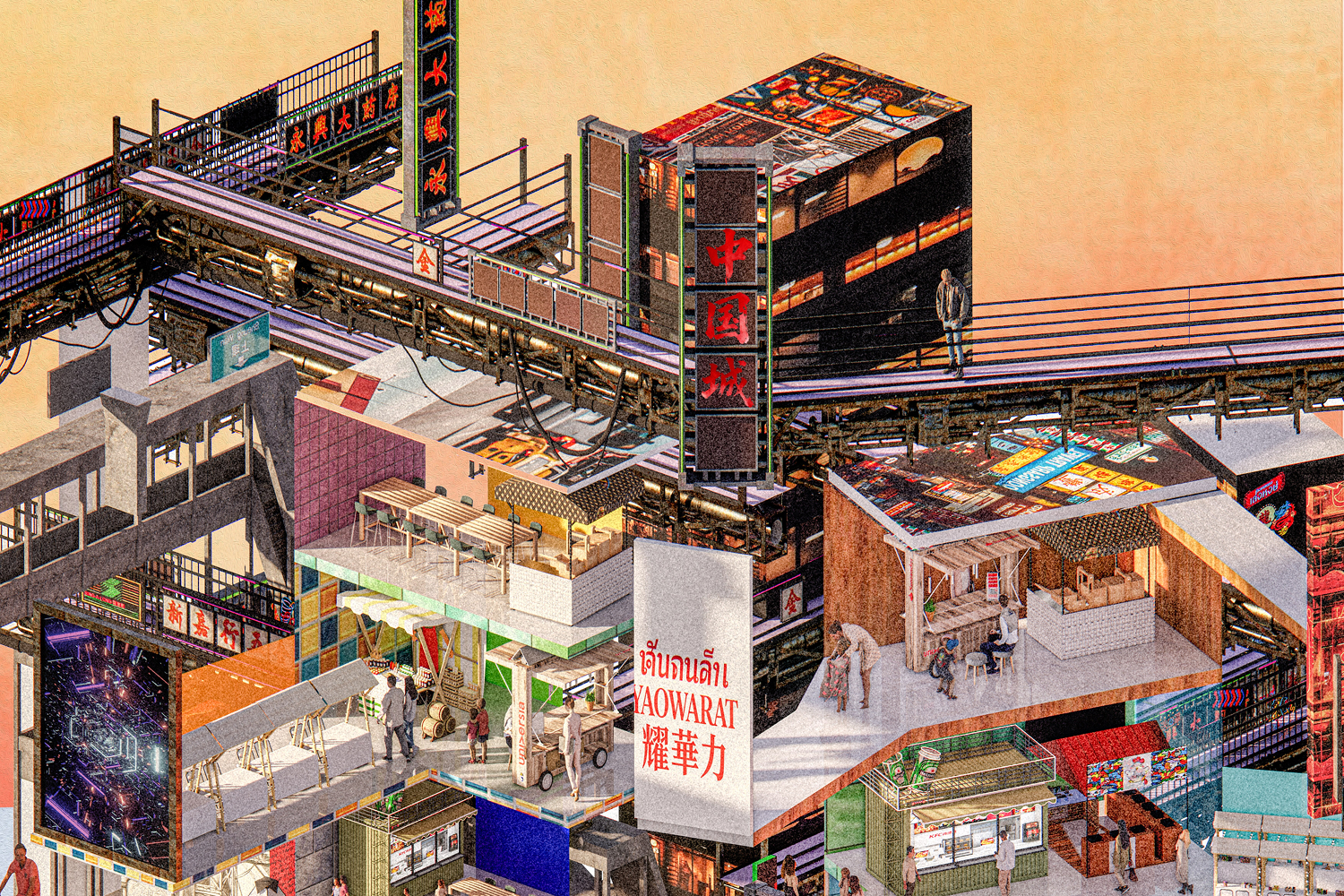
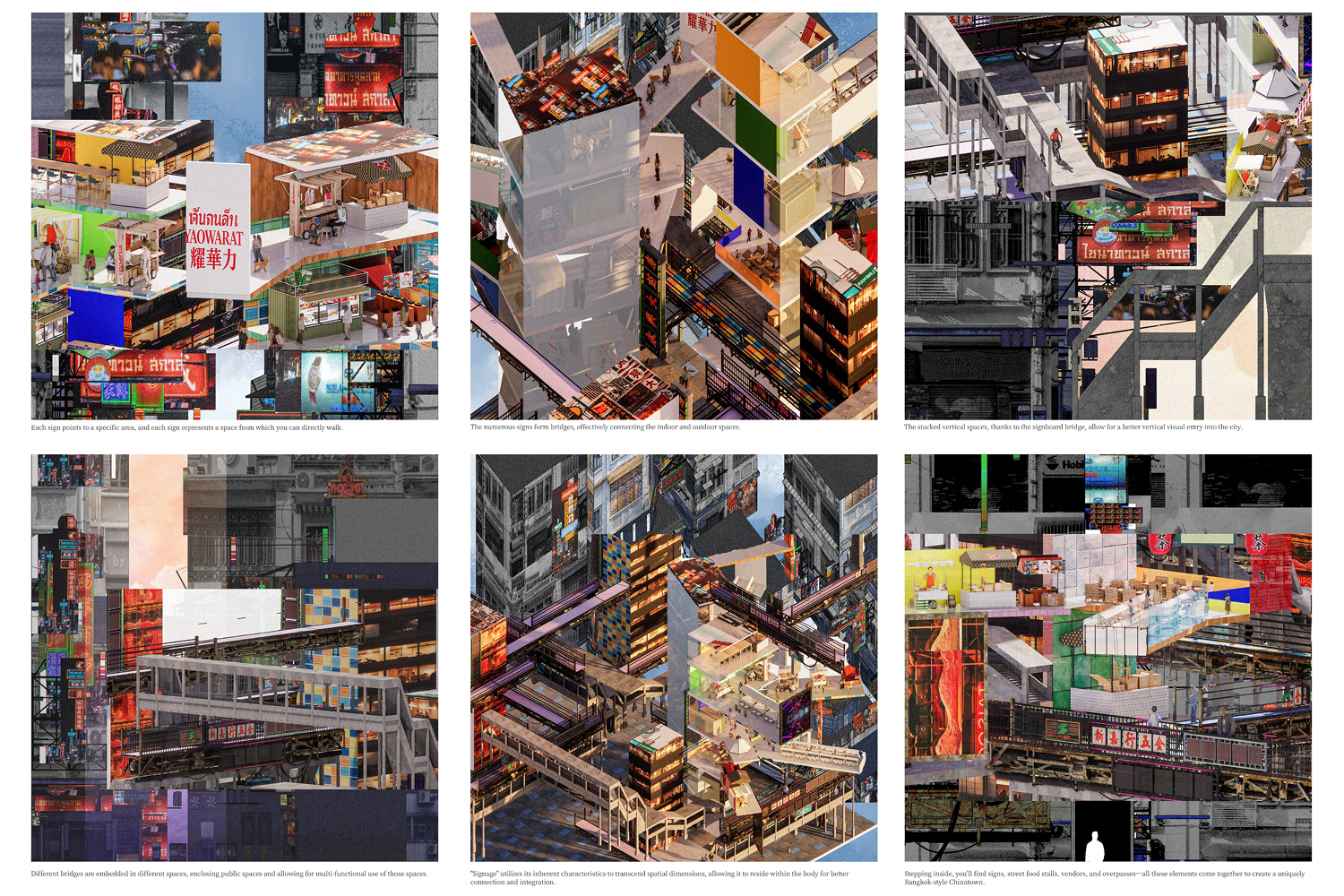
This project investigates Bangkok’s Chinatown through its iconic oversized signage, which defines the district’s visual identity and spatial atmosphere. Four characteristics are identified: parasitic (visually dominant), extensible (projecting into streets), directive (organising movement) and clustered (forming a collective image).
The design translates these qualities into architecture by treating each sign as a spatial unit. Behind every hanging sign is a replaceable functional module, such as shops or exhibition spaces. The sign extensions become internal pathways, while dense layers form a building envelope integrating shading, lighting and wayfinding. As cultural carriers, these modules use diverse languages and styles to reflect Chinatown’s hybrid ecosystem.
A ‘Signage Growth System’ is proposed, where sign-units attach to a structural framework and evolve over time, allowing the architecture to adapt and renew. This approach breaks spatial dimensions, inviting visitors to step inside the signs themselves. Within this ‘Stacked Marketplace’, views are constantly guided and enveloped by layered shopfronts. Between order and chaos, the project creates a vibrant, 360-degree world that merges daily function with urban storytelling.
This project by Junyi Chen was led by Chulalongkorn University visiting professor Jenchieh Hung of the Thai firm Jenchieh Hung + Kulthida Songkittipakdee / HAS design and research.
