Amanda Zhuoran Chen
RMIT University
Australia

Enough is Never Enough begins with a ruin and imagines a tower that never ends – a building that breathes, erodes and grows with the city through time.
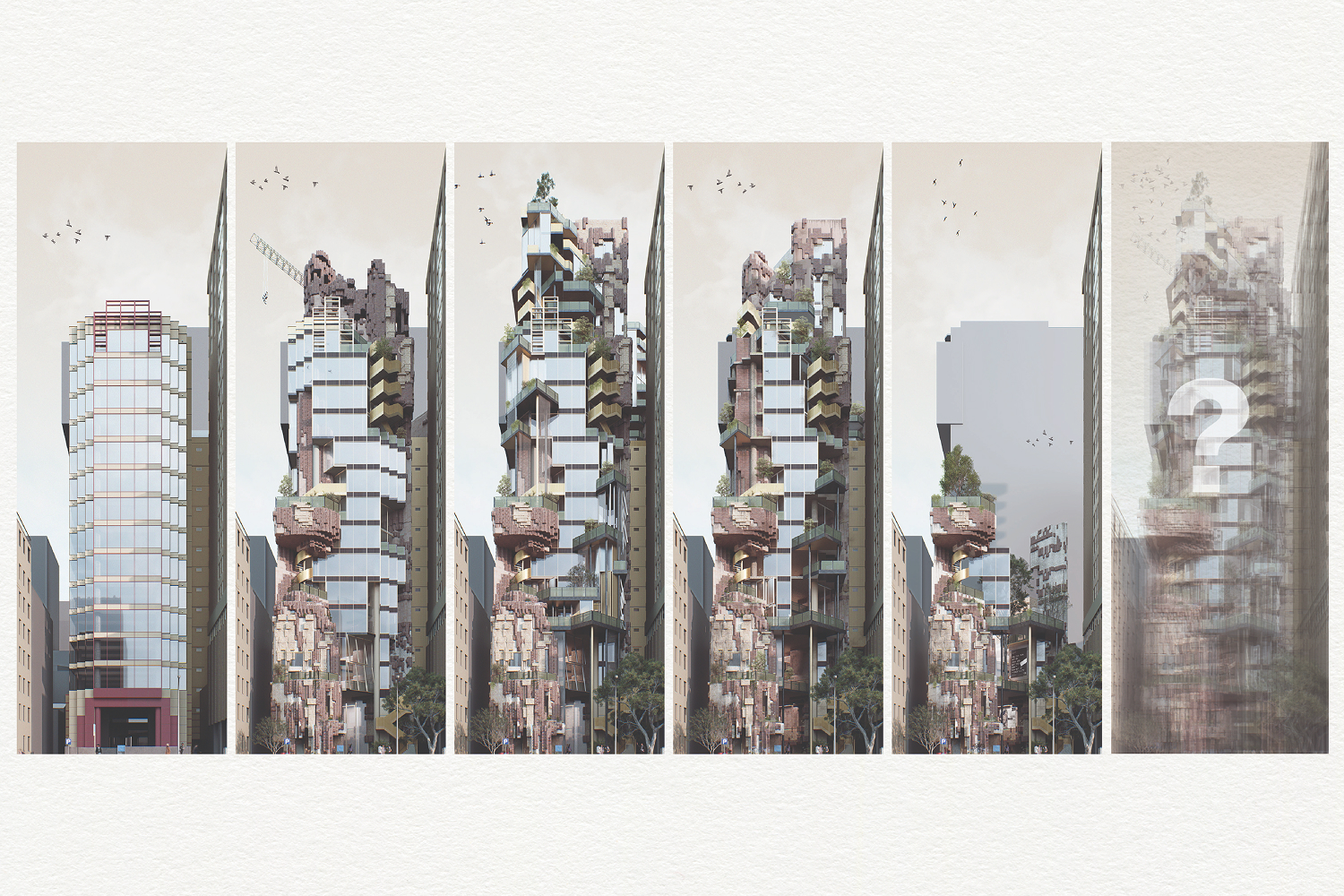
Using 85 Spring Street, a decayed 20th-century office tower in Melbourne as a testing ground, the project critiques the city’s culture of demolition and replacement. Inspired by Stewart Brand’s How Buildings Learn and its theory of shearing layers, it proposes a strategy of ever-changingness: a layered system designed to learn, adapt, and evolve.
The existing structure is retained and extended through computational design with climate-responsive strategies, enabling reuse and future growth.
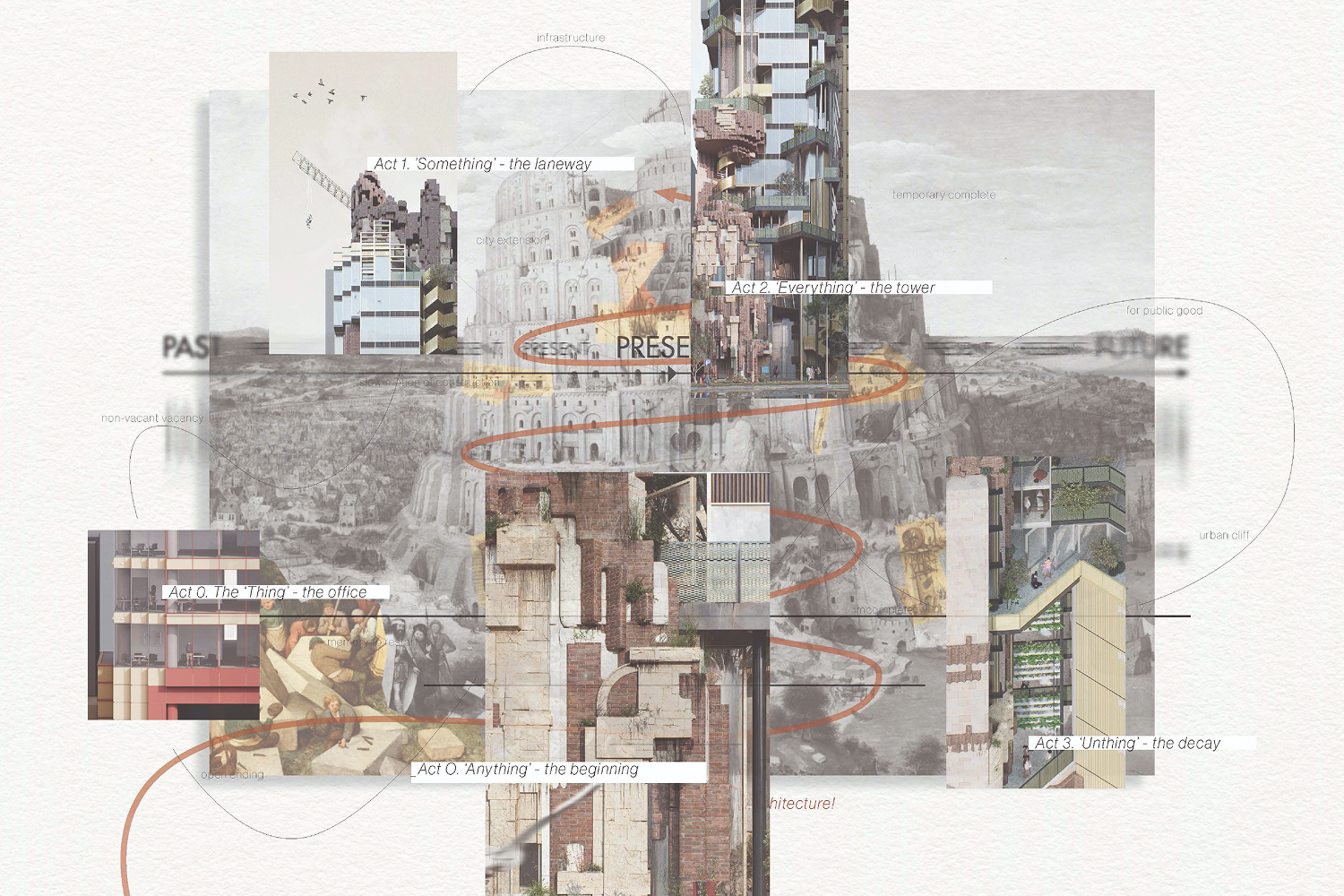
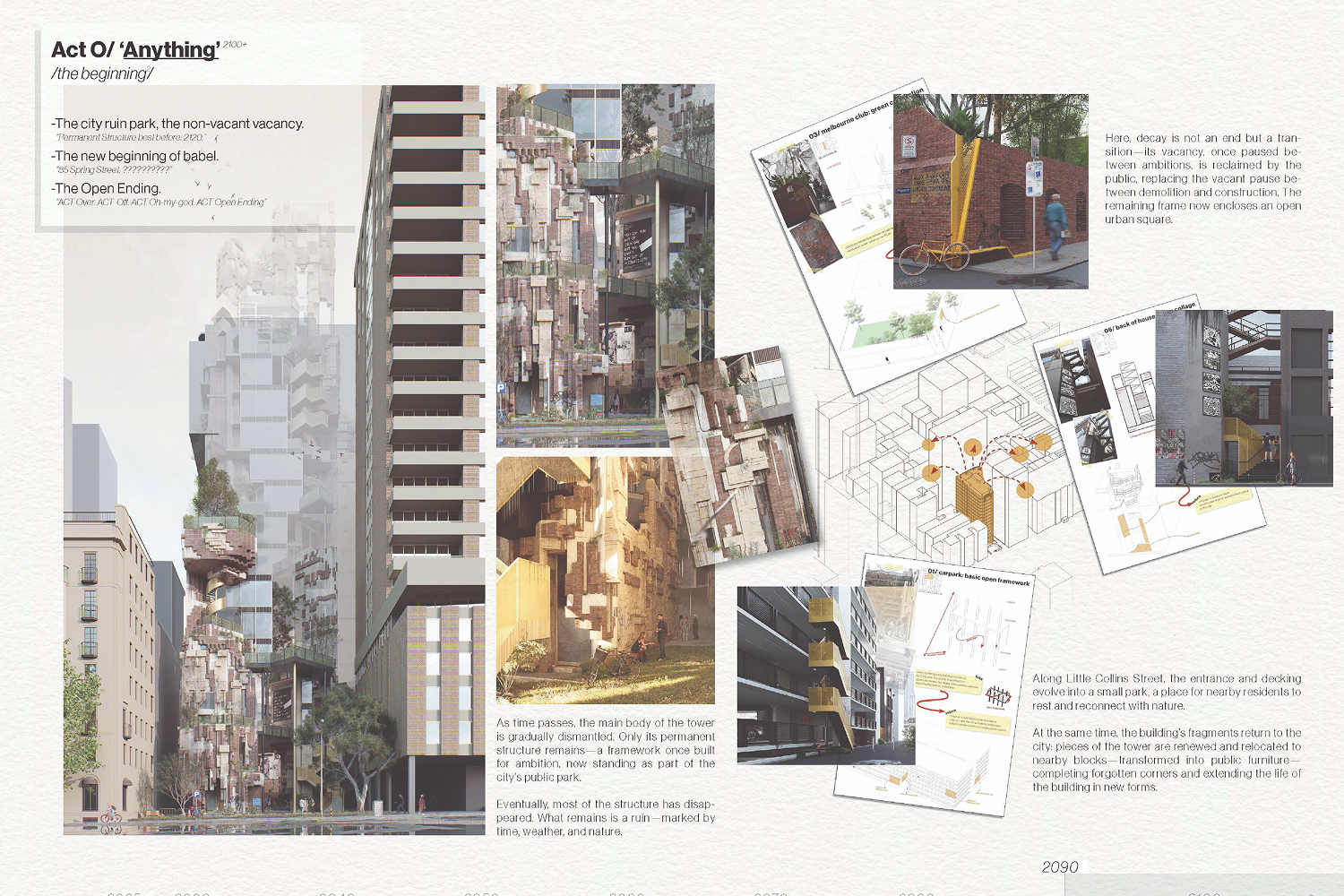
Across five acts, the tower evolves from a forgotten relic into a reinforced civic structure, a vertical city and eventually a rewilded park – redefining the relationship between architecture, climate and urban life. The tower operates as a living framework where social, ecological and construction coexist within an ongoing cycle of regeneration and decay.
Rather than viewing the fall of a building as its end, the project embraces impermanence as continuity. Echoing the myth of Babel, it redefines the architect as a Babel maker – not one who completes, but one who continues, sustaining the dialogue between ruin and rebirth, memory and possibility.
