Luke Thomas Geoffrey Pendergast
University of Tasmania
Australia

Architecture is not innocent. Every building is an act of extraction — and must give back more than it takes to justify its existence.
Positive Offset begins from this admission. The project proposes a new architectural ethic built on two imperatives: strengthen society and regenerate ecology — not as aspirations, but as minimum conditions for practice.
In response, the Positive Offset Architecture Charter and supporting frameworks guide regenerative architectural practice. The building presented here acts as a prototype demonstrating how these principles can be realised in built form.
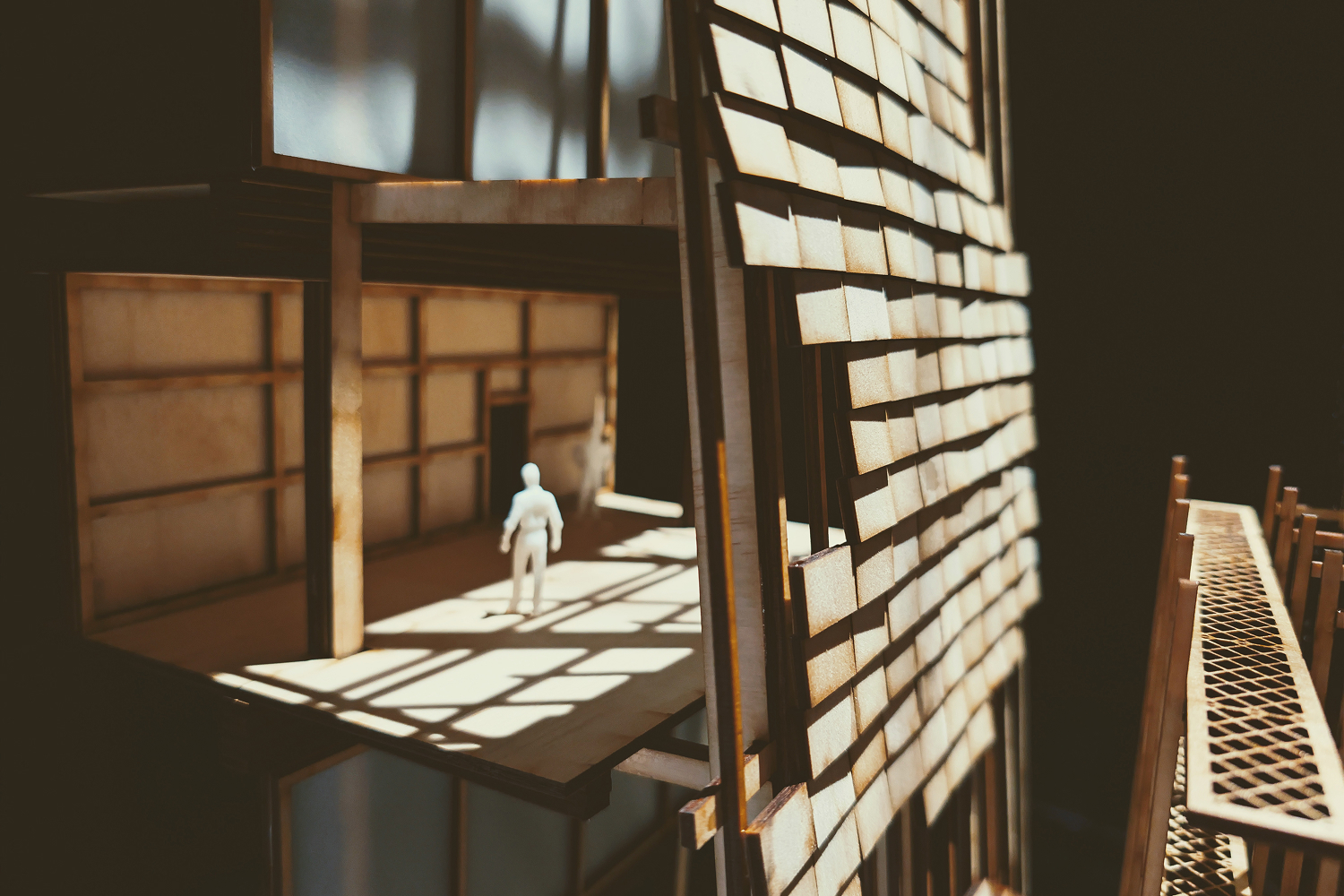
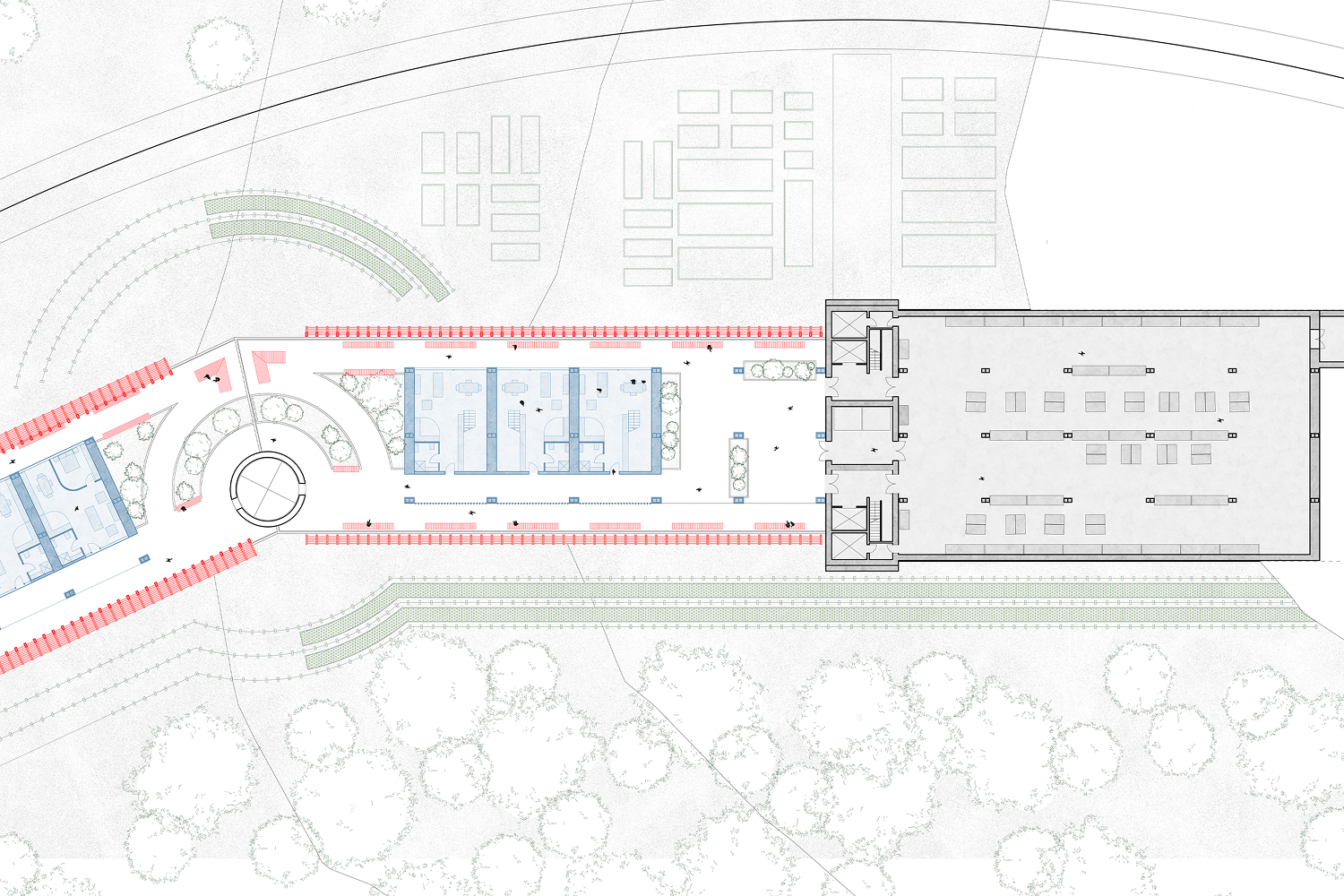
The project takes the form of a cooperative housing and civic workshop building integrating living, making and material renewal within a single architectural system. A long-life timber structure supports short-life sacrificial façade layers made from renewable biomass that store carbon before being periodically cool-burned in controlled kilns, generating heat and biochar that returns carbon to surrounding soils.
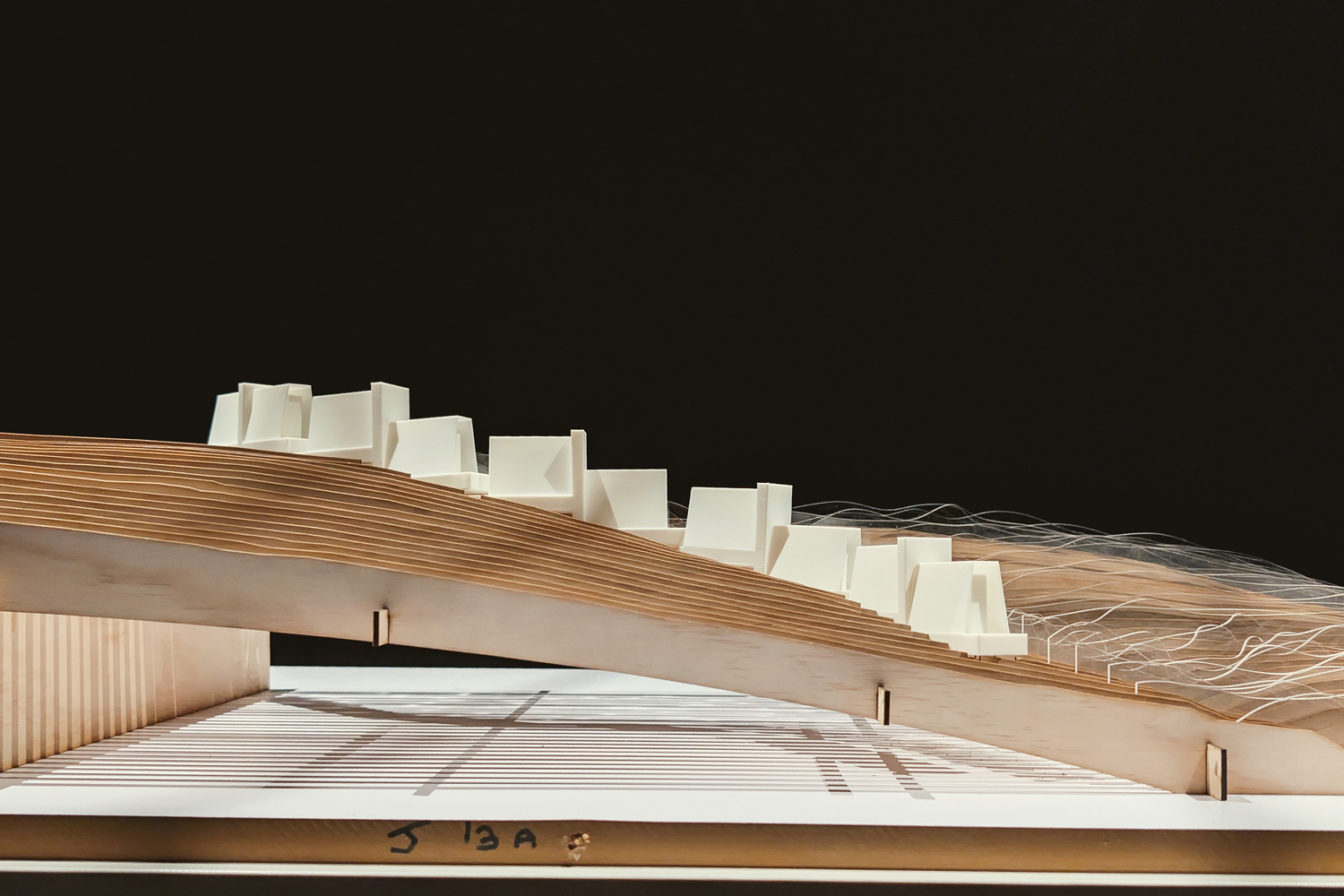
The building is structured as a vertical metabolism: workshops and renewal infrastructure below ground, civic production spaces at public levels and cooperative housing above.
Positive Offset reframes architecture as a living exchange between carbon, energy and community — a regenerative system scalable across climates, cultures, and communities.
