Jordan Knight
Victoria University of Wellington
Aotearoa/New Zealand

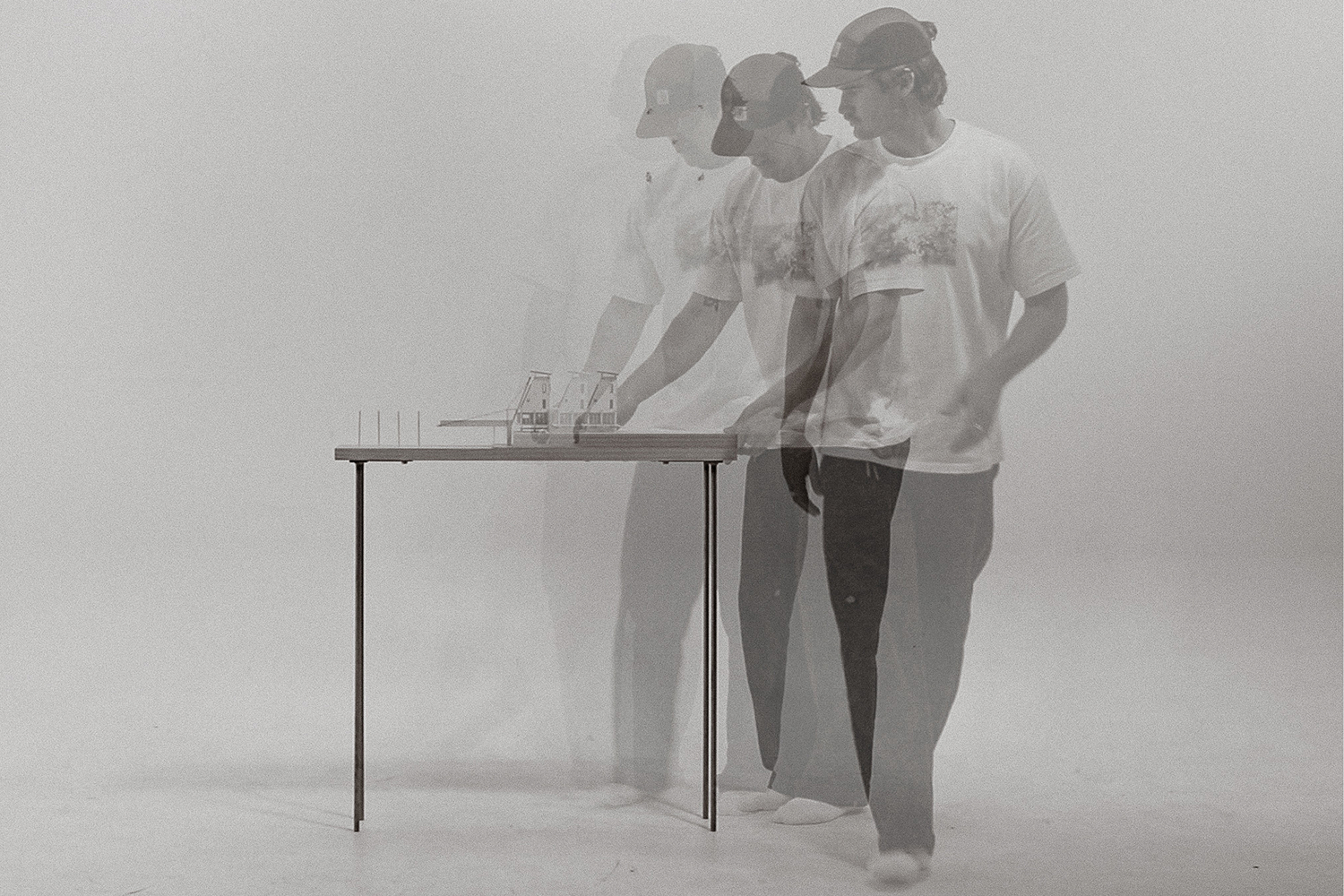
Located in Hawke’s Bay, Aotearoa New Zealand, the project responds to widespread flooding and landscape disruption caused by Cyclone Gabrielle in 2023. The project investigates how architecture might operate within landscapes that are constantly shifting due to anthropogenic water forces. This research does not attempt to solve problems; instead, it speculates on those issues by engaging with them through design. The research consists of three experiments that increase in scale and architectural complexity and expand and contract between ideas relating to the territory, landscape, and architecture.
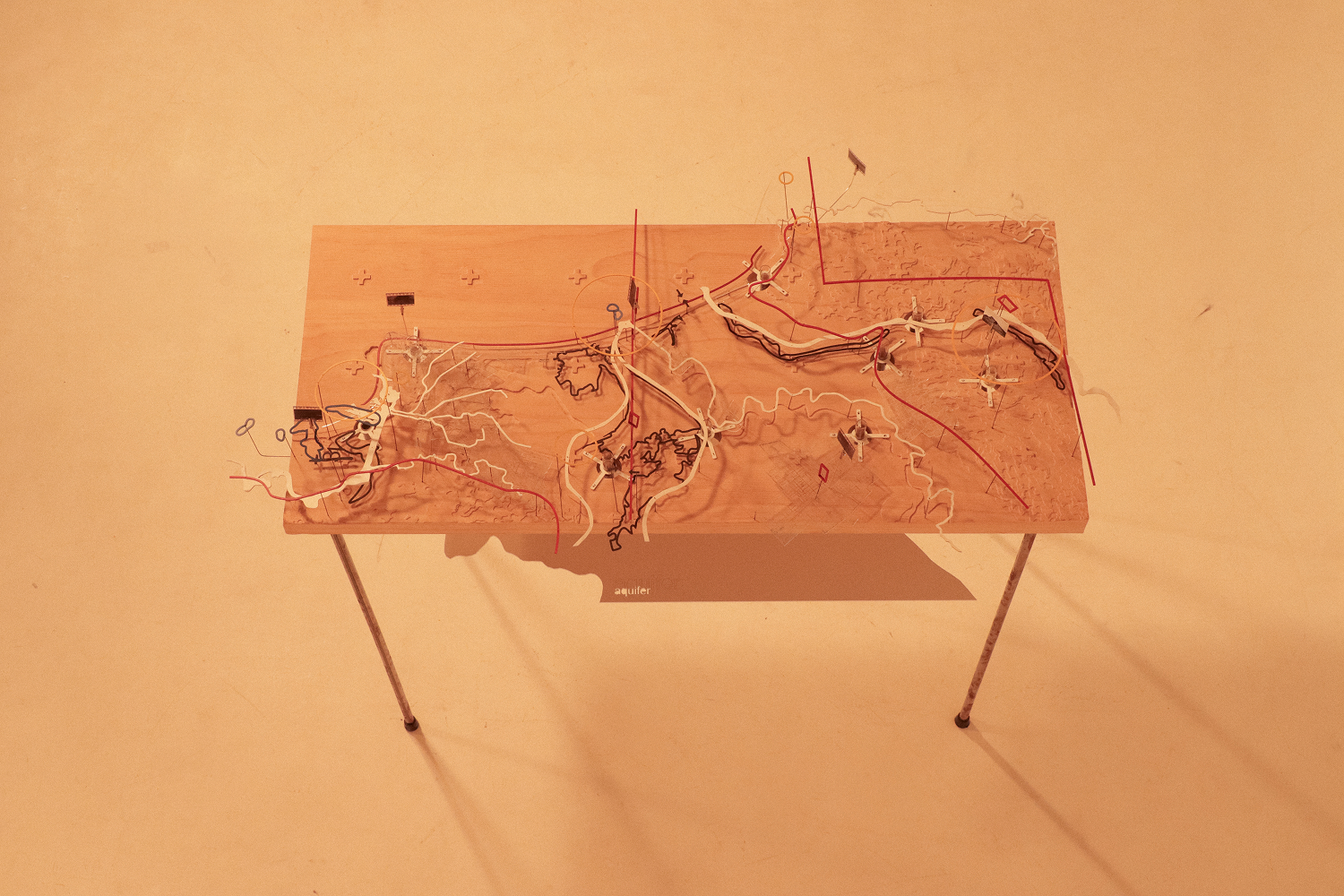
Design experiment 1 ‘Tensions in a Temporal Landscape’ is a mapping-based project, exploring human and non-human tensions within the Hawkes Bay landscape. Through cartographic layering, it seeks to describe water issues in Hawkes Bay over time to reveal proto-formal conditions for spatial opportunity.
Design experiment 2 ‘Inhabiting the Edge’ is a small-scale dwelling which responds to coastal erosion as a dynamic marker within the changing landscape.
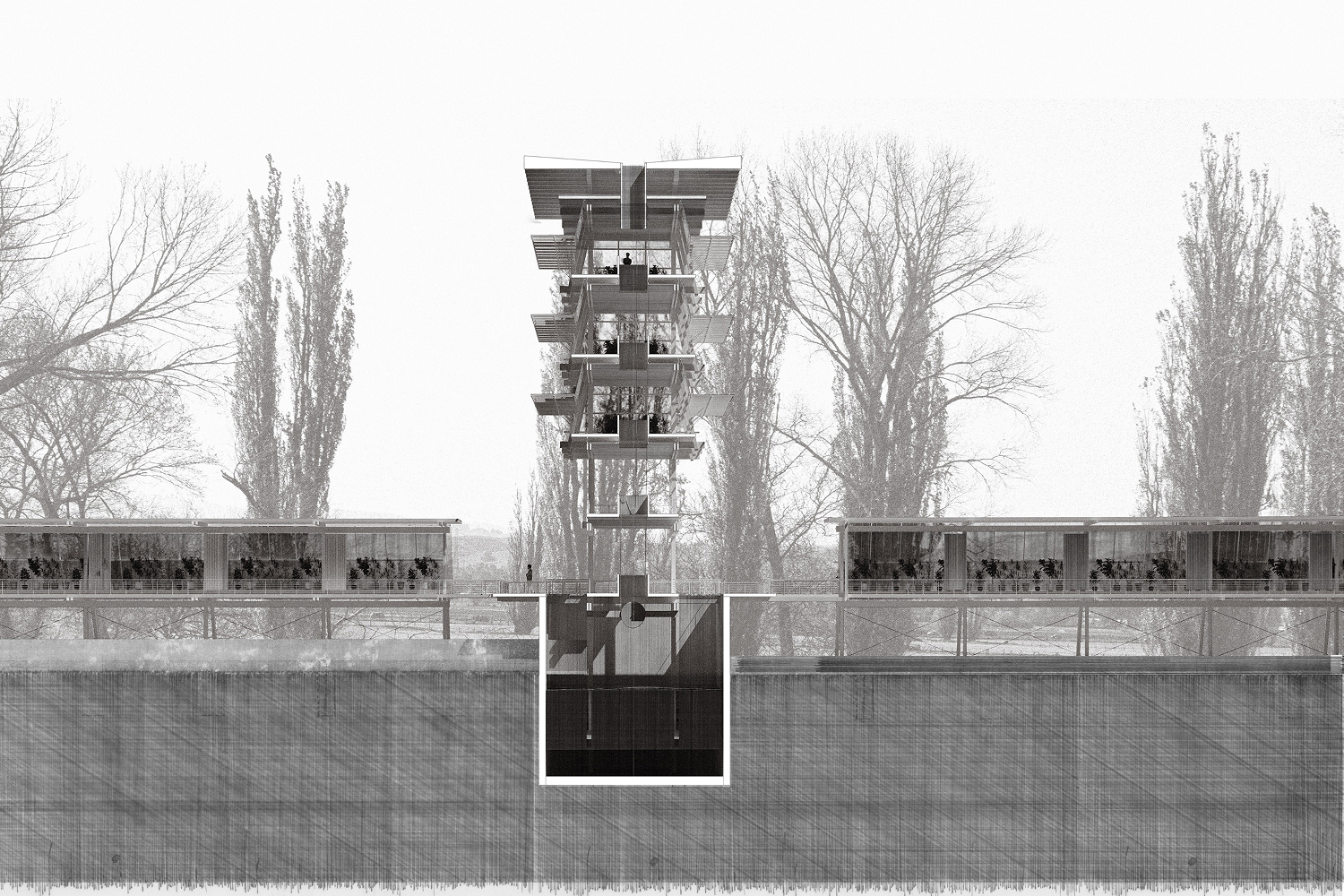
Design experiment 3 ‘Fertilising Pakowhai’ responds to the Cyclone Gabrielle event through landscape and architecture. This intervention explores a speculative wetland re-farming project as a way of thinking about anthropogenic water problems and ‘prompting’ future change.
