Saanjh
Metanoia Designs
India

In the vibrant pulse of Ahmedabad’s Sindhu Bhavan Marg, Saanjh – the latest flagship for Geetanjali Salon by Metanoia Design – invites a quiet departure from the expected. While most wellness spaces rely on clinical whites and hurried lights, Saanjh (meaning “twilight”) captures that fleeting, magical hour when the world is washed in a soft, otherworldly radiance.
The project was born from a radical brief to move beyond the routine of grooming and into the realm of ritual and the architects have created a “theatre of transformation” that rewrites the archetype of the modern salon.
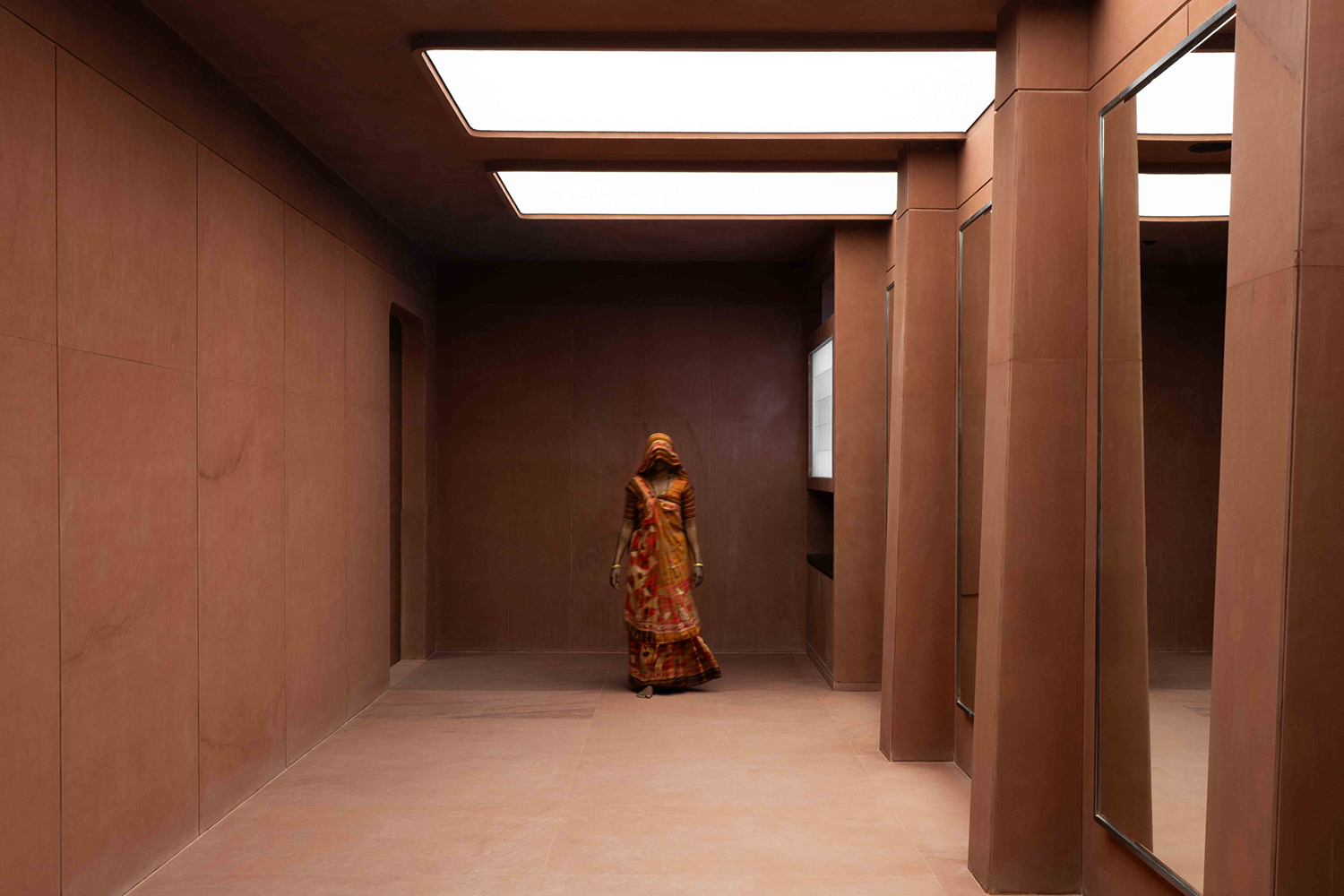
Stepping inside feels like walking into a warm, monochromatic embrace. There is no cold marble or sterile glass here. Instead, the walls, ceilings, and floors are saturated in a soulful palette of crimson-rust. It is the color of sun-baked earth – a hue that feels as much like a memory as it does a visual choice.
The journey begins at the reception, a conscious departure from typical retail environments. Red Agra sandstone sweeps across the floor and in a move toward material honesty, glossy signage has been replaced by a sculptural system of sandstone and micro-concrete. Above, “stretched” luminous ceilings bathe the rooms in a diffused, shadowless glow, mimicking a permanent golden hour.
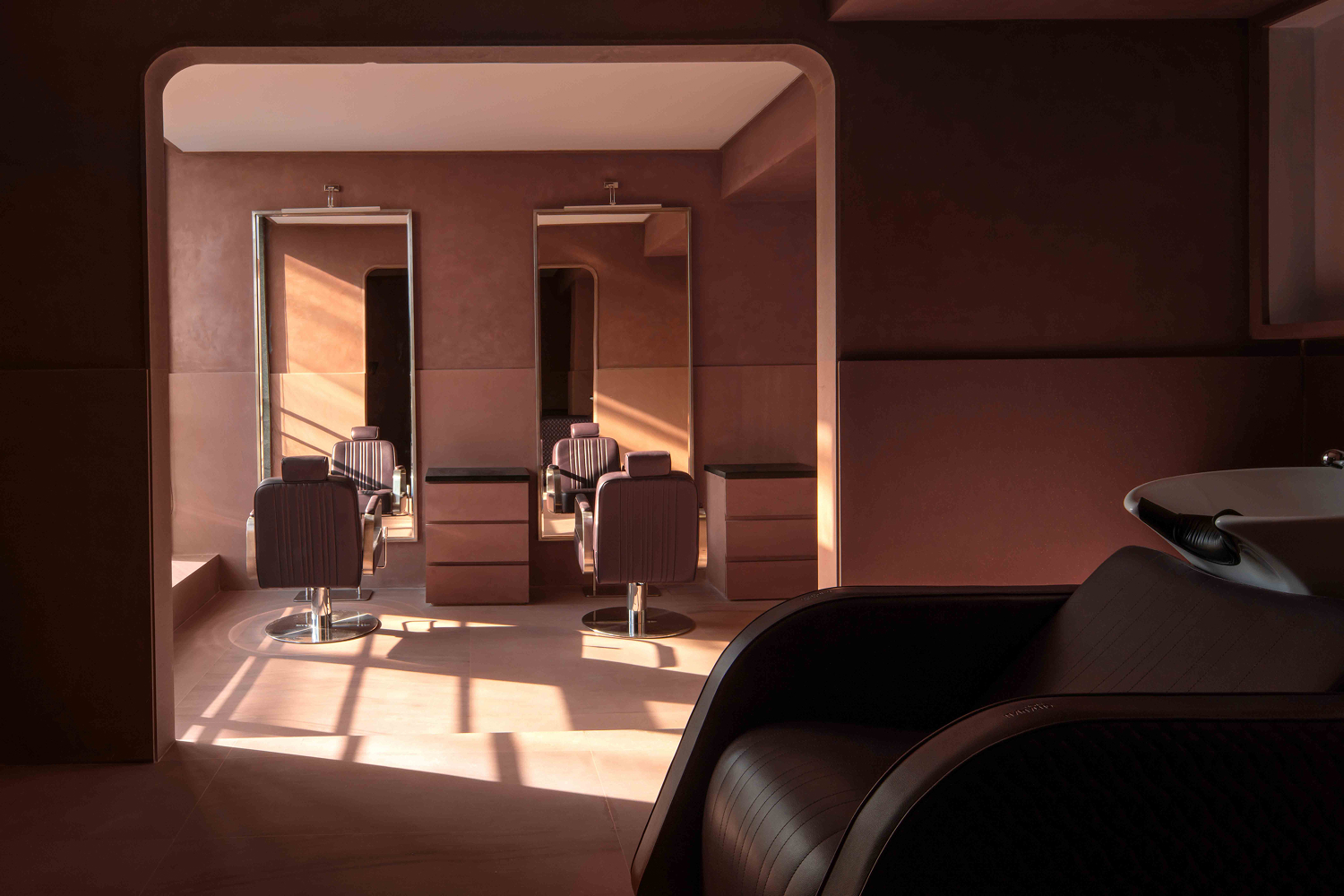
At the heart of the layout lies the hair styling zone. The styling bays are crowned with circular halos of light, turning craftsmanship into a ceremonial performance. The matte surfaces form a protective enclosure, allowing the “live act” of beauty to unfold.
As one moves deeper inside, a dedicated men’s grooming wing is shielded by a latticed screen inspired by traditional Indian jaali work. To achieve this, the architects developed a custom material dubbed “Stone-Crete,” mixing sandstone dust with micro-concrete.
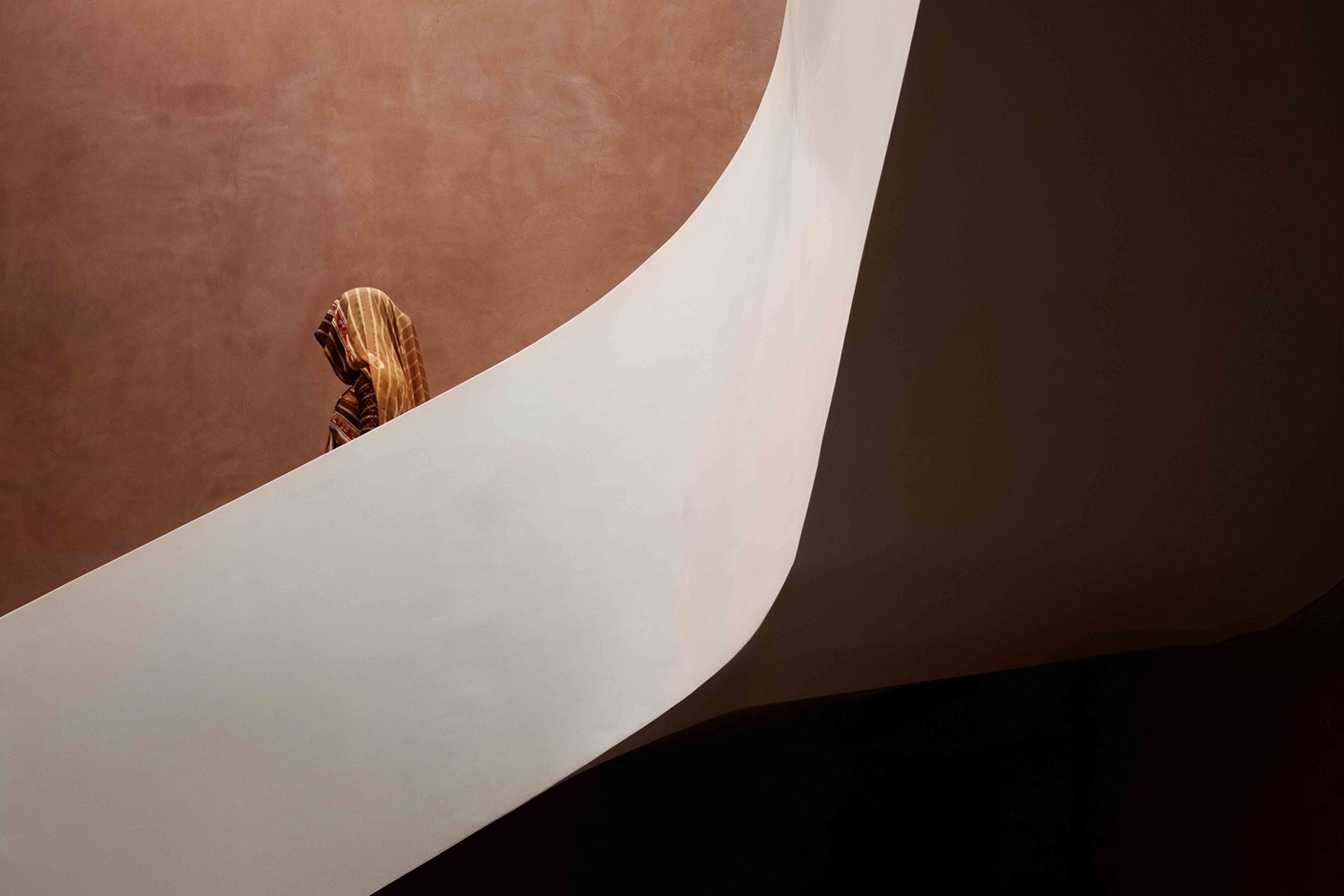
The eye is eventually drawn to a striking ribbon of white: a fluid, curved staircase made of mild steel that cuts through the double-height volume like installation art.
With Saanjh, Metanoia Design has shifted the focus back to the human experience. Through Indian materiality and the power of color, the design creates a sanctuary that is both locally resonant and globally significant – a place where architecture doesn’t just divide space, but tells a story.
Photography: Avesh Gaur
